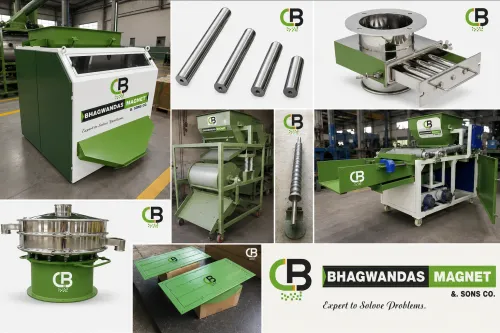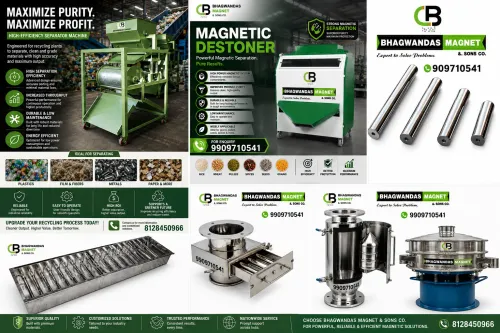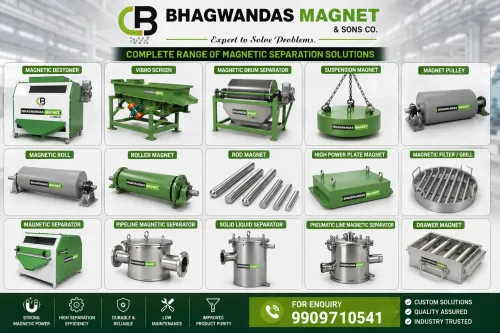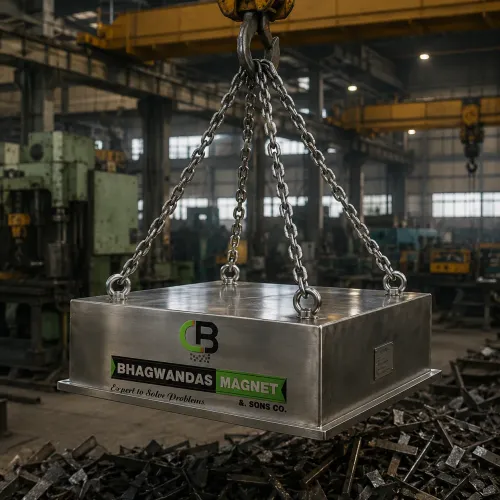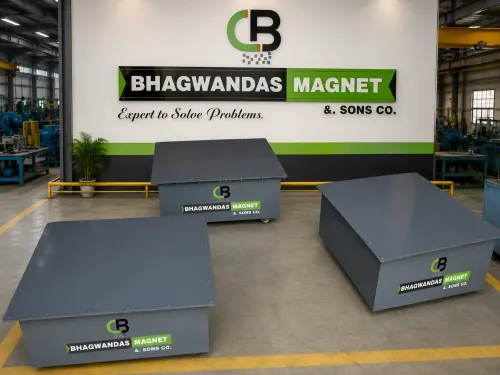
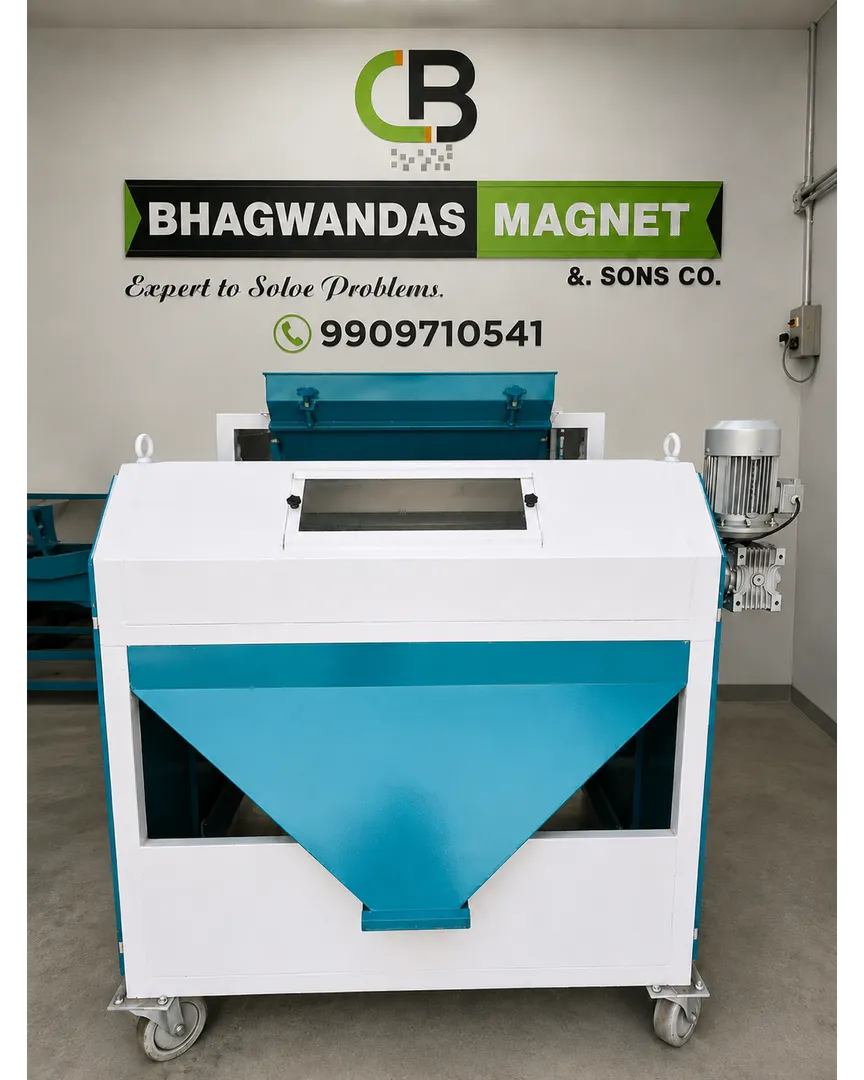
Dausa is developing into an important industrial and agricultural district of Rajasthan, with businesses engaged in agriculture, food processing, mining, mineral processing, cement, chemicals, ceramics, plastics, recycling, steel fabrication, foundries, and power generation. As manufacturers increasingly adopt automated production systems, controlling ferrous contamination is essential for maintaining material quality and protecting expensive processing machinery. Bhagwandas Magnet & Sons Co., established in 1984 and headquartered in Ahmedabad, Gujarat, has decades of experience in designing and manufacturing industrial magnetic equipment for demanding applications. As a reliable Magnetic roller Manufacturer, the company produces precision-engineered magnetic rollers that support continuous separation, improve automation, and increase productivity. Companies searching for a trusted Magnetic roller Manufacturer in Dausa can rely on Bhagwandas Magnet & Sons Co. for engineering expertise, quality-focused manufacturing, and durable magnetic separation solutions.
A magnetic roller works by generating a strong magnetic field that attracts ferrous particles from dry bulk materials while non-magnetic material continues through the production line. This continuous separation process can be integrated into conveyors, feeders, and other material handling systems. By removing iron and steel particles before they reach downstream equipment, manufacturers can improve material cleanliness and reduce contamination-related problems.
Agricultural processors in Dausa can use magnetic rollers for grains, pulses, seeds, and other dry products. Food processing plants can use magnetic separation as an additional quality-control stage before packaging. Mining and mineral processing facilities can remove unwanted ferrous particles before further processing, while cement manufacturers can protect crushers, conveyors, mills, and grinding systems. Chemical, pharmaceutical, plastic, ceramic, recycling, steel, foundry, and power industries can also integrate magnetic rollers where ferrous contamination needs to be controlled.
Bhagwandas Magnet & Sons Co. manufactures magnetic rollers using quality magnetic assemblies, precision-machined components, and heavy-duty construction suitable for continuous industrial environments. Modern manufacturing practices support accurate component fabrication and consistent magnetic performance. Quality assurance checks before dispatch help ensure dependable operation. Durable construction, efficient operation, and low maintenance requirements make the equipment suitable for businesses seeking reliable long-term performance.
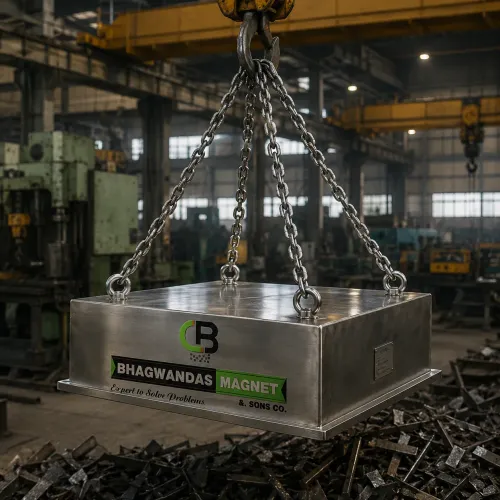
Magnetic rollers provide an important layer of machinery protection. Ferrous particles may originate from raw materials, machine wear, tools, or material handling equipment. If these particles enter crushers, mills, mixers, conveyors, or other sensitive machinery, they can cause wear and potentially lead to production interruptions. Capturing the contaminants earlier can help reduce maintenance requirements and improve overall equipment reliability.
Another advantage is continuous automation. Once integrated into the material handling line, a magnetic roller can operate while production continues, reducing the need for frequent manual inspection. This can improve process consistency, reduce operator intervention, and support higher productivity. For businesses modernizing their facilities, magnetic separation can therefore become a useful part of an automated contamination-control strategy.
When selecting a Magnetic roller Manufacturer in India, industrial buyers should consider equipment design, magnetic performance, construction quality, manufacturing experience, customization capability, and technical assistance. Bhagwandas Magnet & Sons Co. combines more than forty years of manufacturing experience with precision engineering and modern production methods. For industries in Dausa, its magnetic roller solutions can help improve material purity, protect machinery, reduce maintenance, strengthen automation, and support dependable long-term manufacturing efficiency.
Keywords