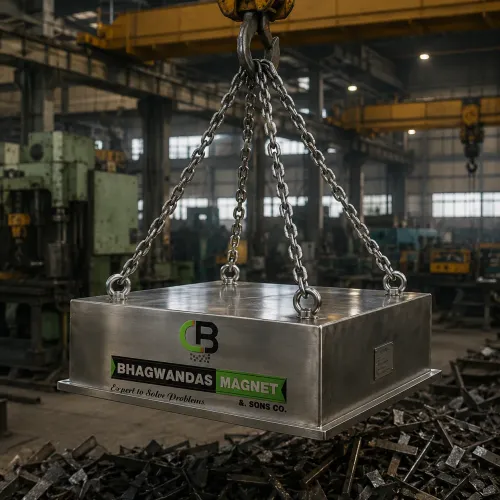
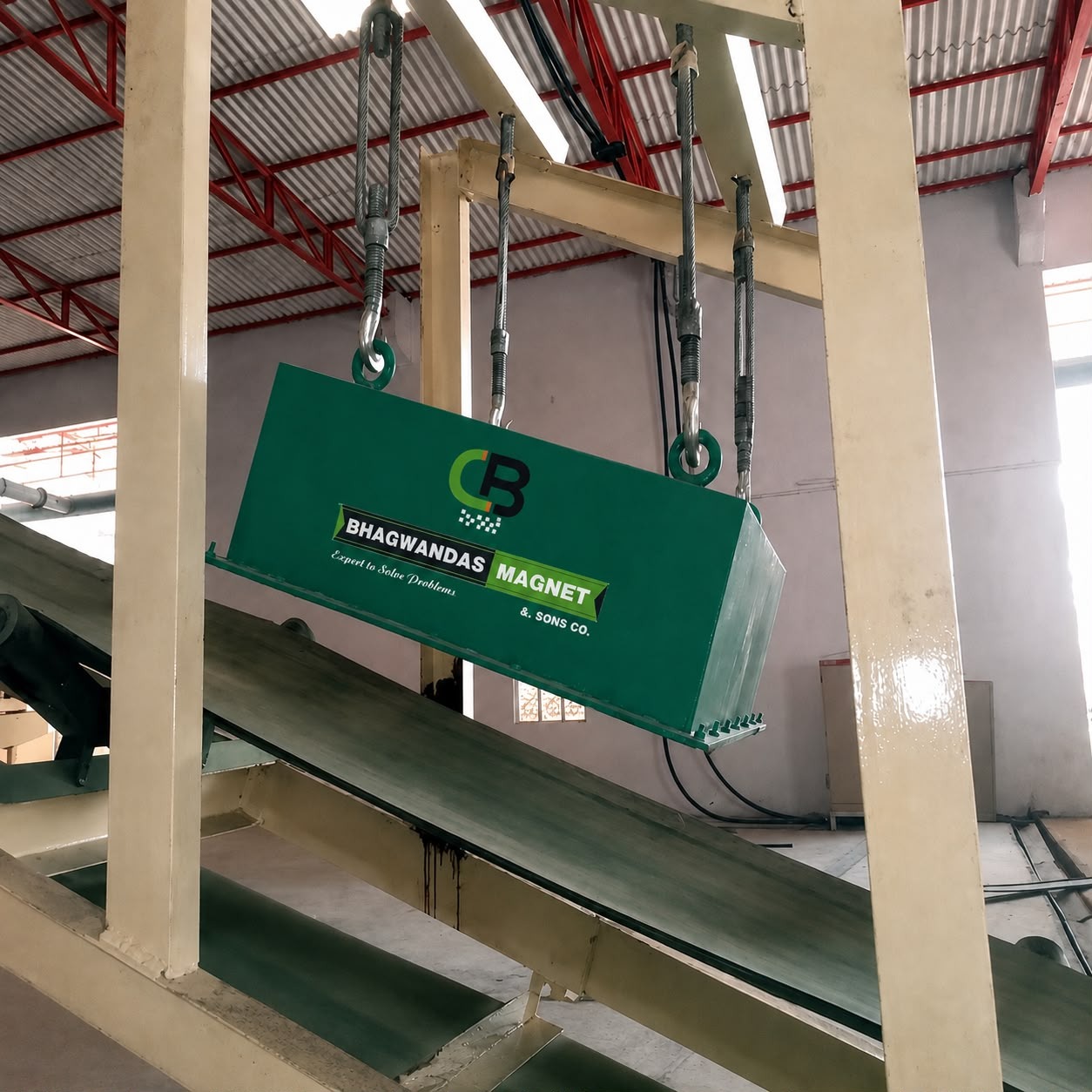
Modern industries require reliable material-handling systems that can protect machinery while maintaining continuous production. In Karjat, businesses connected with agriculture, food processing, engineering, packaging, recycling, chemicals, plastics, ceramics, and other manufacturing activities may depend on conveyors to move raw materials and finished products. During transportation, unwanted iron and steel objects can enter the material stream and create operational risks. A dependable permanent suspension magnet Manufacturer in Karjat can help industries introduce continuous overhead magnetic separation. Bhagwandas Magnet & Sons Co., established in 1984 and based in Ahmedabad, Gujarat, manufactures industrial magnetic equipment for demanding applications.
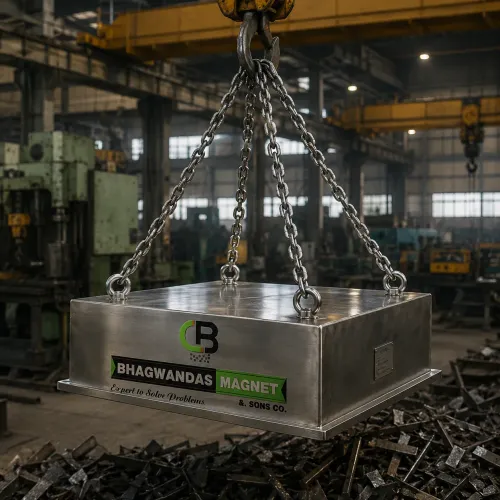
A permanent suspension magnet is an overhead magnetic separator installed above a conveyor. It uses permanent magnetic assemblies to generate a continuous magnetic field that attracts ferrous contaminants from material passing underneath. Depending on the application, it can capture iron particles, steel fragments, bolts, nuts, nails, wires, and other tramp metal before these contaminants reach downstream machinery.
How does the system support industrial production? As material travels along the conveyor, ferrous objects enter the magnetic field and are attracted toward the magnetic assembly. Non-magnetic material continues through the conveying process. Because the magnetic force is continuously available, separation can take place without repeatedly stopping the conveyor. This makes the equipment suitable for automated material-handling operations.
Bhagwandas Magnet & Sons Co. is an experienced permanent suspension magnet Manufacturer with manufacturing expertise dating back to 1984. From Ahmedabad, Gujarat, the company combines precision engineering, modern manufacturing practices, heavy-duty construction, quality assurance, and industrial innovation. These capabilities support industrial magnetic equipment designed for dependable performance, low maintenance, and long service life.
Permanent suspension magnets can be useful in many sectors. Agriculture and food processing facilities may use magnetic separation to support contamination-control procedures. Mining and mineral processing plants can install overhead magnets to protect crushers, screens, and conveyors. Cement manufacturers can use them in bulk material-handling systems. Recycling and steel industries may require heavy-duty magnetic equipment for mixed material streams. Chemical, pharmaceutical, plastic, ceramic, foundry, and power plant operations can also use suitable magnetic separators according to their process conditions.
Automation is one of the key benefits for industrial buyers. Continuous magnetic separation reduces reliance on manual inspection and helps maintain consistent material movement. By removing tramp metal before it reaches sensitive machinery, the system can also help reduce the risk of equipment damage and avoidable production interruptions. This contributes to better productivity and operational reliability.
Permanent magnetic technology can also support energy efficiency because permanent magnets maintain their magnetic force without continuous electrical energization. The equipment therefore does not require constant electricity simply to generate its magnetic field. Durable construction and appropriate maintenance can further contribute to long service life.
Before selecting equipment, buyers should evaluate conveyor width, belt speed, material depth, installation height, material characteristics, contamination size, and operating environment. Correct application engineering is essential for suitable magnetic coverage.
Companies searching for a reliable permanent suspension magnet Manufacturer in India can consider Bhagwandas Magnet & Sons Co. for its established manufacturing history, Ahmedabad-based expertise, modern production capabilities, precision engineering, quality assurance, and commitment to customer satisfaction. Its industrial magnetic solutions can help Karjat businesses strengthen automation, protect machinery, improve productivity, and support dependable long-term operations.
Keywords